Bend Oregon fly fishing hub page with links to current fishing reports, printable local river fly calendars, common bugs with matching flies, local river tips and more... (Updated 10/14/26)
PICK your fishing location and time - best early mornings & late evenings + overcast days - your likely flies, nymphs, streamers, terrestrials and fishing gear.
In small, clear streams, fish upstream to avoid spooking trout. On wide rivers, fishing downstream is often easier.
Stay low. Fish face upstream (food comes to them). If they see you, they will run. DO NOT wear bright colors / splash around / move quickly / make a lot of noise. Move slowly and quietly.
When casting upstream 'dead drift'.
Cast along the banks or areas just downstream of rocks & debris (fish do not want to have to work hard to stay in the fast-moving current.
When fishing downstream 'skate' / 'twitch & skidder' your flies, and retrieve slowly.
If you're fishing from a bank (especially fishing downstream) try to crouch down when casting.
Important: Help yourself - wear polarizing sunglasses so you can see the fish better!
Mayfly (Dry)Parachute Adams (Gray, Purple Haze), Baetis Mayfly, Blue Wing Olive (BWO), Pale Morning Dun (PMD), Green Drake Comparadun, March Brown Comparadun, Mahogany Dun, Rusty Spinner
Caddis (Dry)Caddis (various), Elk Hair Caddis, Green Caddis, Spotted/Speckled Caddis, Grannom Caddis, Green Rock Worm (Green Sedge), October Caddis (Fall)
Stonefly (Dry)Terrestrials (ant, beetle, grasshopper), Yellow Sally, Golden Stonefly /Clark's Stone (orange / yellow), Little Black Stones, Olive Stones, Little Yellow Stones
Spring - In the springtime, the best time of day for most fish tends to mid-morning and late afternoon in early spring and early morning and late afternoon towards the end of spring.
Summer - In summer, the best times of day to fish by far are early morning from dawn until 2 hours past sunrise and late afternoon from 3 hours before sunset until dusk.
Fall - During the fall, the best times of day to catch most species of fish is early morning and late afternoon.
Winter - In the winter, wait until mid-morning to start fishing for the best results. Fishing in the mid-to-late afternoon is usually very good as well.
Rain, Snow, Clouds - Rain and clouds can bring about great trout fishing and some of the best fly fishing for trout occurs right before and during a steady rain event.
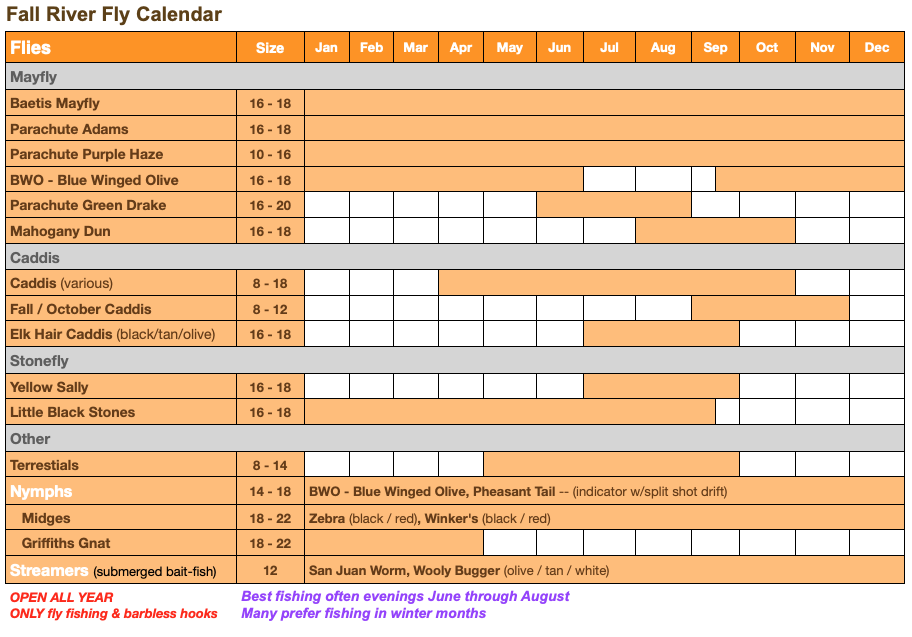
Best fishing often evenings June through August, many prefer fishing in winter months
From Google (6/11/2026)
To successfully fish the Fall River (whether targeting the spring-fed waters in Central Oregon or fishing during the autumn season), focus on light tippet, stealthy presentations, and subsurface imitations. Because the crystal-clear waters and pressured trout demand a precise approach, scaling down your tackle is the key to hooking up.
Fall River Tactics: if you are fishing the famous spring creek in Central Oregon near Bend/Sunriver, the water remains remarkably clear and cold year-round.
The Right Tackle: Stick to a 4-weight or 5-weight fly rod. You will need a long leader (10 to 15 feet) tapered down to 6X or 7X tippet.
Flies: Rely heavily on small, tungsten bead-head nymphs (like Pheasant Tails or Zebra Midges) or slowly swung streamers. When dry fly fishing, match the prolific hatches with Blue Winged Olives (BWOs) or Pale Morning Duns (PMDs).
Presentation: Trout often hide beneath the lava ledges along the banks. Cast close to the structure, dead-drift your flies perfectly, and use fluorocarbon tippet for sub-surface presentations so the fish don't spot your line.
From Google AI (7/21/2026)
The Fall River (near Bend, OR) features year-round, technical spring-creek fishing for wild rainbows and browns. Success relies on matching specific, highly predictable hatches including Blue-Winged Olives, Pale Morning Duns, and caddis - throughout the spring, summer, and fall.
A seasonal hatch breakdown and strategies for the Fall River:
Spring (March - May):
Hatches: Early season features Blue-Winged Olives (BWO) and Midges.
Tactics: Nymphing with small patterns (size 18-22) is highly effective before the hatches. Sight fishing with dry flies becomes excellent by May.
Summer (June - August):
Hatches: Pale Morning Duns (PMD), Green Drakes, and Yellow Sallies.
Tactics: PMDs offer fantastic mid-morning dry fly action. Evening caddis hatches are incredibly reliable as temperatures drop.
Fall (September - October):
Hatches: Mahogany Duns, BWOs, and October Caddis.
Tactics: Considered the prime time for dry fly fishing as trophy browns and rainbows become highly active.
Winter (November - February):
Hatches: Steady hatches of Midges and small BWOs.
Tactics: Target slower spring-fed flats with emergers and light nymphs; dry fly action is still possible on warmer days.
From Fly Fishers Place (July 2026): A year-round fishery heavily dependent on seasonal hatches. Key Hatches: BWO and Midge hatches in the winter, followed by the massive Mother's Day Caddis hatch, PMDs, and Mahogany Duns in the fall.
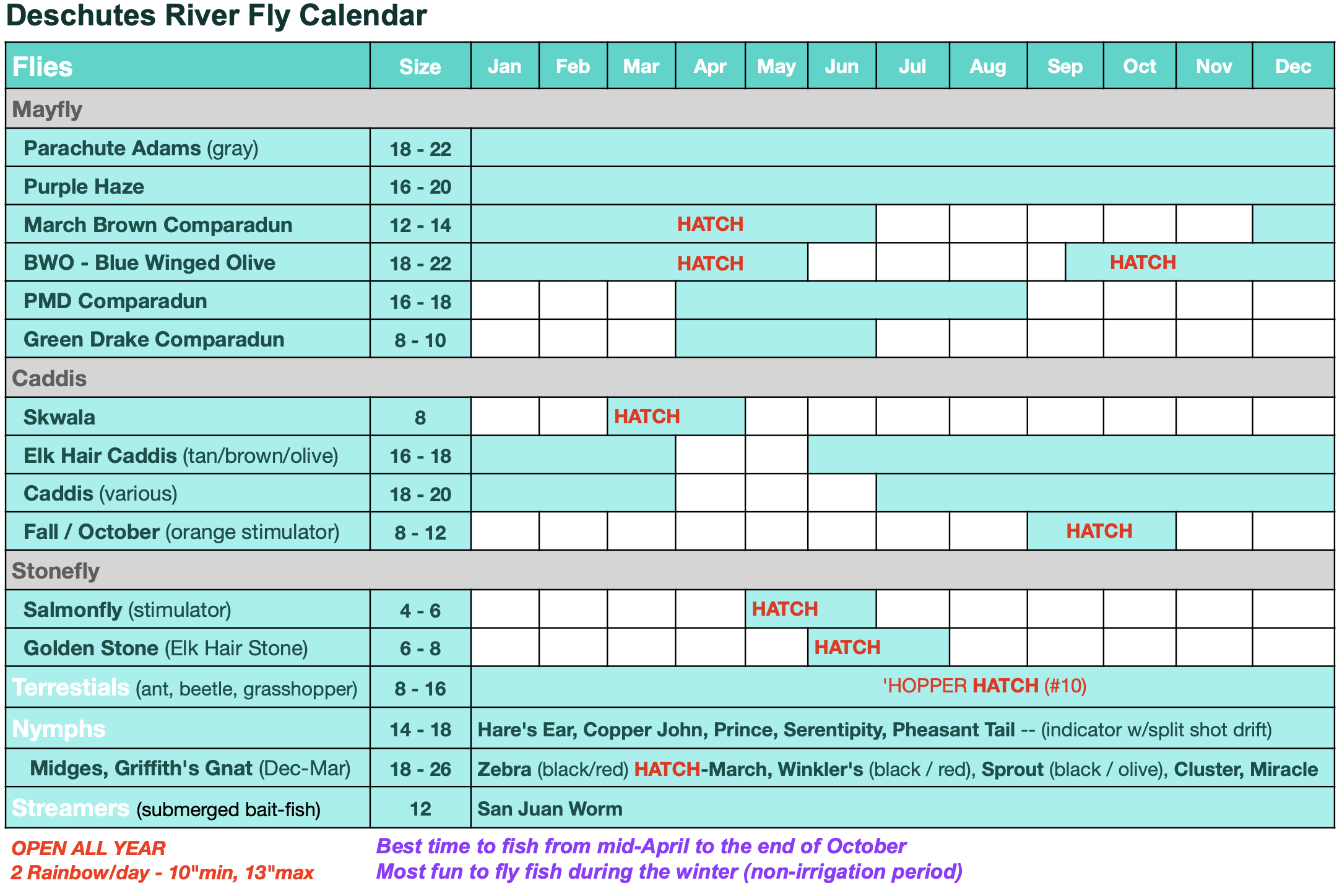
The Deschutes River offers year-round fly fishing, with key windows centering around Skwalas in early spring, the legendary Salmonfly hatch in late May to early June, summer caddis, and fall steelhead runs. Timing and target species vary significantly by season.
Spring (March - May)
Skwala & March Browns: Fishing starts early with Skwala and Blue Winged Olive (BWO) hatches in March. March Browns emerge in April.
Salmonfly Hatch: Starting near Warm Springs, this famous hatch peaks in late May to early June, triggering aggressive surface feeding with giant dry flies (sizes 4-8).
Summer (June - August)
Golden Stones & Caddis: After the Salmonflies, Golden Stones take over, followed by prolific Tan and Green Caddis hatches in June and July.
Pale Morning Dun (PMD): Great dry fly action happens during early mornings and evenings.
Summer Steelhead: Early arrivals enter the lower river (Mack's Canyon to the Columbia) in July.
Fall (September - November)
October Caddis: A signature event where giant orange caddisflies bring big trout to the surface in September and October.
Steelhead Peak: The summer/fall steelhead run peaks in September and October, with fish spreading throughout the entire lower 100 miles.
Winter (December - February)
Nymphing & BWOs: Primarily a subsurface game. Nymphing with stoneflies or using small BWO dries on warmer, overcast afternoons remains productive.
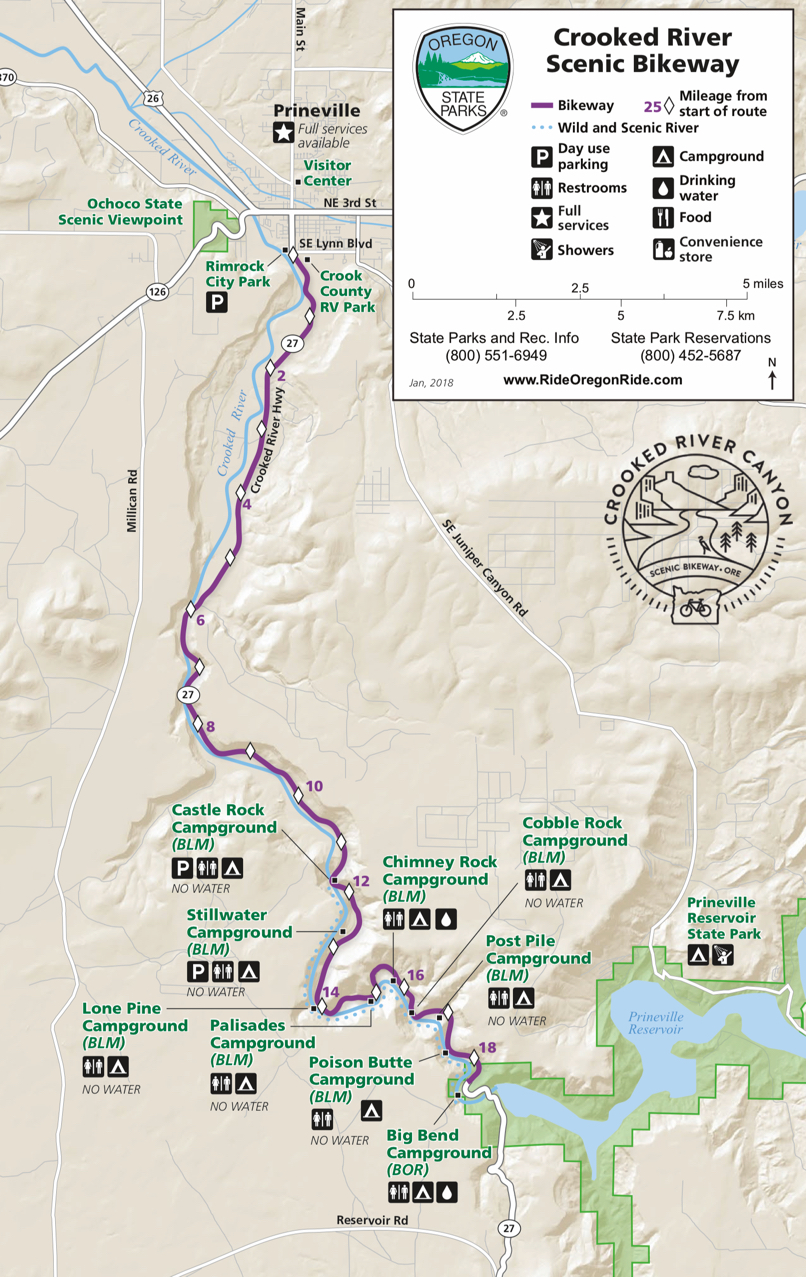
The Crooked River is one of the state's most popular spots and is located 45 minutes east of Bend, Oregon. This small stream is known as a year round fishery. It has the most prolific trout population of any stream in Central Oregon.
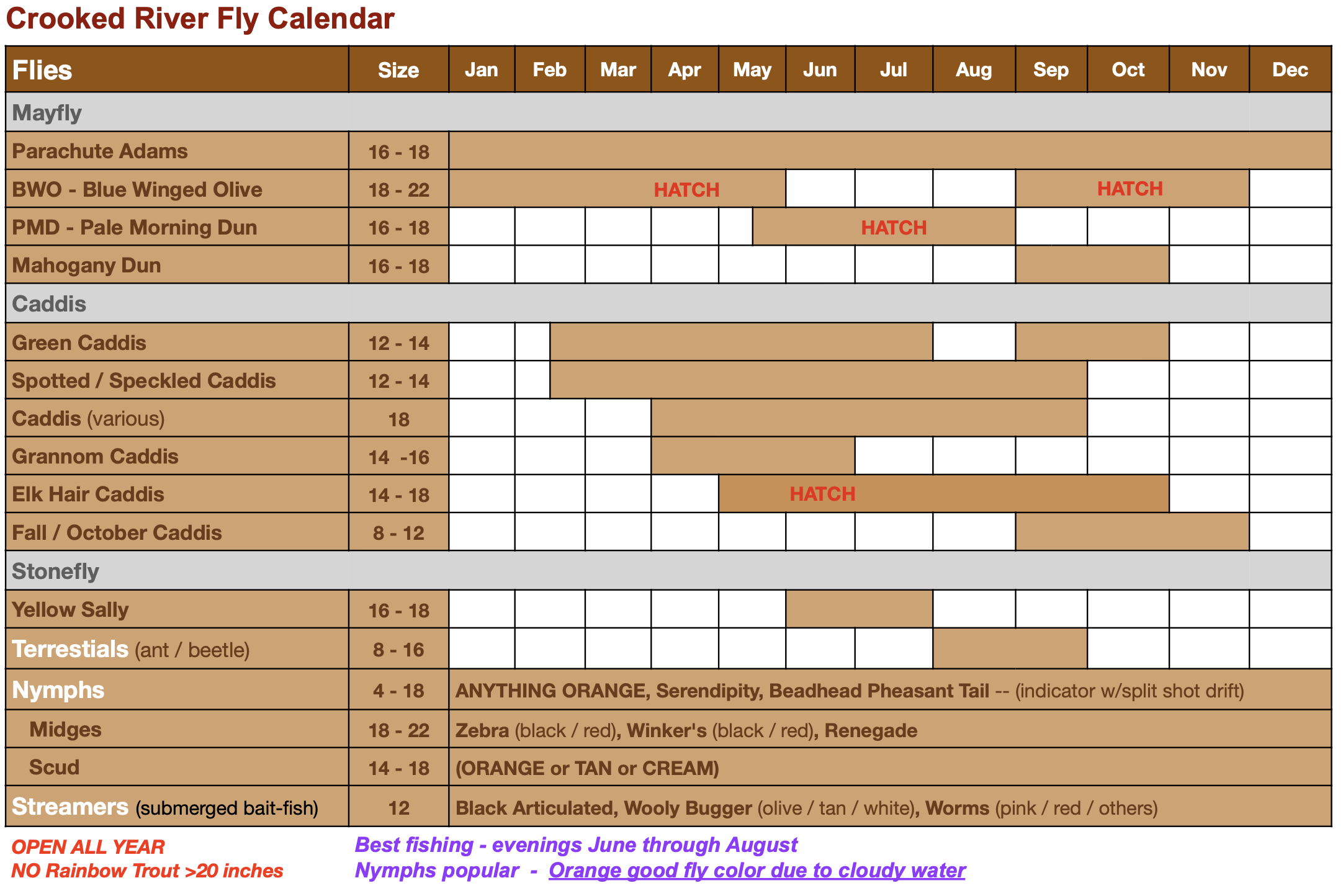
Peak fishing runs from March through October. The river is known for prolific midge, BWO (Blue Wing Olive), and PMD hatches, as well as hopper action in the fall.
Spring, Summer and Fall often gives us amazing fishing opportunities with BWO's, PMD's, Caddis and Midges accounting for the very best fishing of the season. Nymph fishing with small zebra midges and micro mayfly nymphs is absolutely the best way to take trout and some really nice whitefish on the Crooked. Around the middle of May to the middle of June you should encounter some monster caddis hatches.
In the fall add Mahogany Duns to the list of hatches and look for them in September and early October in pretty decent numbers.
Winter fishing is often good, there are good midge hatches to be found and drifting a zebra midge is hard to beat.
Scuds, Eggs and Prince Nymphs are often a really good bet for the off times of hatches or biological drift activity.
The Crooked River is best fished in the Tailwater section from Bowman Dam back downstream towards Prineville to Mile Marker 12. This 8 mile stretch of river is the best section of water to fly fish. There are also limited opportunities to fish the Crooked River near Smith Rock State Park and near Opal Springs.
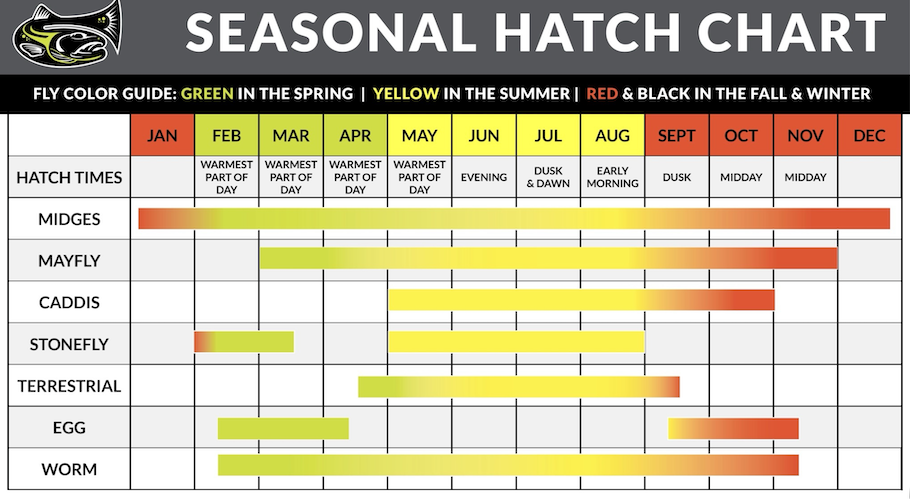
Seasonal Hatch & Activity Calendar
Winter (December - February): Midges and scuds dominate. Target slow, deep pools with small Zebra Midges (sizes 18-24) and egg patterns, as whitefish spawn. Mid-morning and early afternoon offer the best midge hatches.
Spring (March -May): Spring brings strong Blue Wing Olive (BWO) hatches and increasing PMD (Pale Morning Dun) activity. Nymphing is highly productive, but look for fish rising to BWOs in the slower, glassy sections.
Summer (June - August): PMDs and caddis hatches take over. Early mornings feature excellent dry-dropper fishing, while late mornings and afternoons see reliable PMD activity. Terrestrials, particularly Yellow Sallies and hoppers, begin producing fish by late summer.
Fall (September - November): This is prime time for hopper droppers and Cranefly hatches. As temperatures drop later in the fall, Blue Wing Olives return as the primary hatch, providing excellent dry fly fishing through the late afternoon.
Techniques & Tips
Rigs: Dry-dropper setups, Euro-nymphing, and standard strike indicators are most effective, as the Crooked River is highly technical and demands a perfectly dead-drifted fly.
Tippet: The water is notoriously clear and the fish are easily spooked. Use light 5X to 7X tippet to ensure a natural drift.
Location: The primary 8-mile tailwater section from Prineville Reservoir / Bowman Dam down through the Chimney Rock/Smith Rock areas provides the best and most accessible year-round water.
The fish are wild and difficult to fool. When the fish see a fly, they see it with only the lighting conditions affecting it. Use long, light leaders and tippets. You will need to use 6x and 7x tippets that are three and four foot long often.
When you can see the trout, they can most likely see you. Now that said, understand the best, most effective way to catch a trout from the Metolius River or any other spring creek that flows smooth, is to first spot the fish. You have to do that in such a way as not to alert the fish of your presence, either by sound or sight. In other words, the key is to stalk the trout. This must be done very carefully. Remember that trout cannot see objects low to the horizon due to the refraction of light. The lower you stay, the better off you are. Get down and move along on your knees if you have to. The best way is to hide behind something.
The other big key is to fish the hatches. When trout are feeding on hatching insects they are occupied with that. Catching them is much easier than just offering them something when they are resting. Knowing what is about to hatch is very important. If nothing is hatching, then you want to be fishing imitations of what is going to hatch next and what is most plentiful and available for the trout to eat.
The last key I will mention is that when the water is flowing smooth and undisturbed on the surface, it allows the trout to see your fly much better.
If you concentrate on fishing the current seams and the riffles and runs when you can find any, you will increase your odds. Anything in the water large enough to change the speed and flow of the water will create these current seams such as tree tops, grass lines, etc. The smoothest, slickest places on the river are the most difficult to fish. However, if the trout are feeding in such places, you need to fish there. That is where the long, light leaders and tippets come in. The best situation is to find a feeding trout or one that is rising to sip insects near or on the surface. If they are not rising and they are feeding on something near the bottom, watch for their white mouths to flash. That tells you they are eating something. Needless to say, when you do find a feeding trout, you must make drag free presentations. That does not only apply to fish on the surface, it applies to fish feeding beneath the surface also. A nymph coming down the stream on the bottom at a speed faster than the current is flowing on the bottom will only spook the trout.
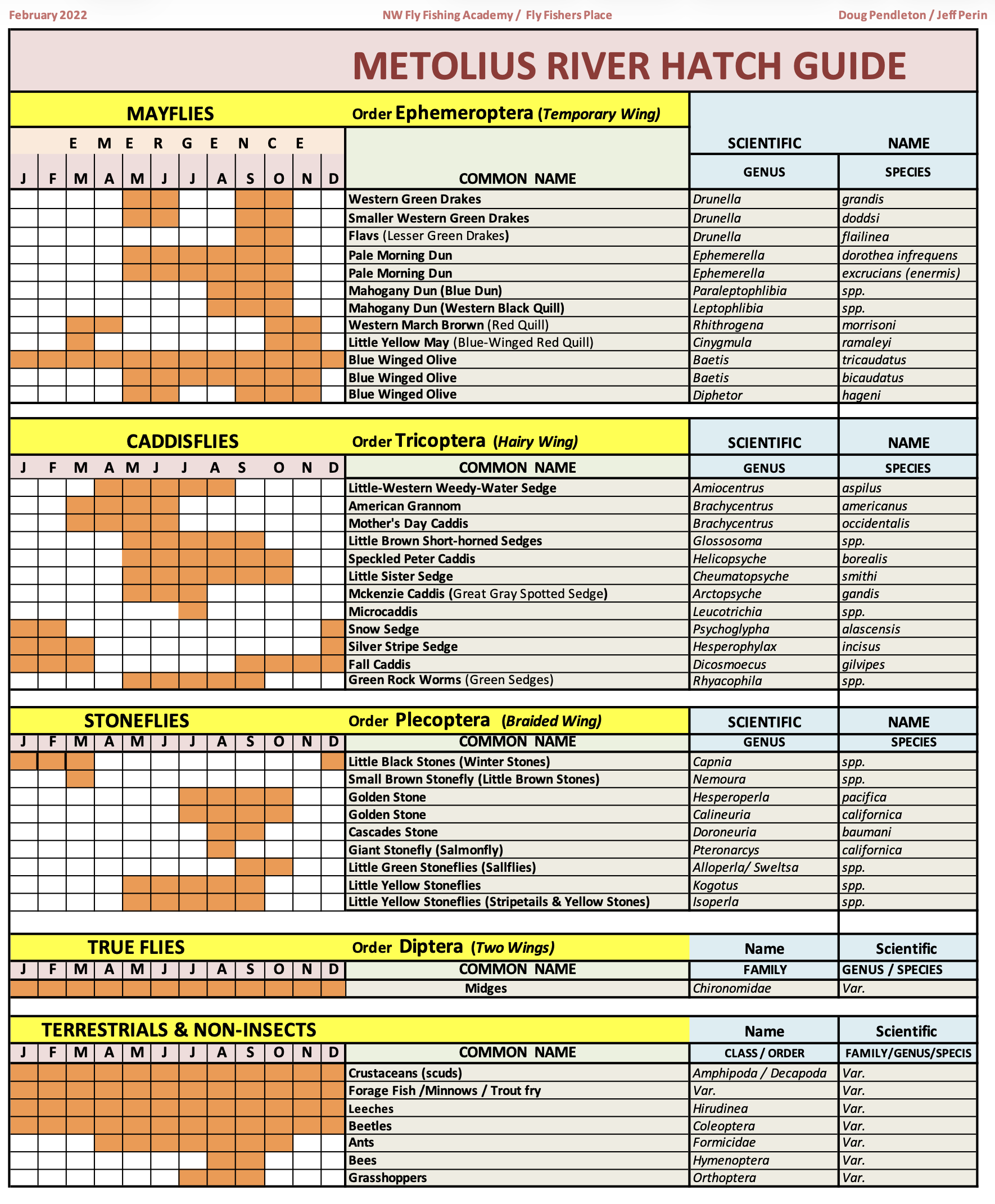
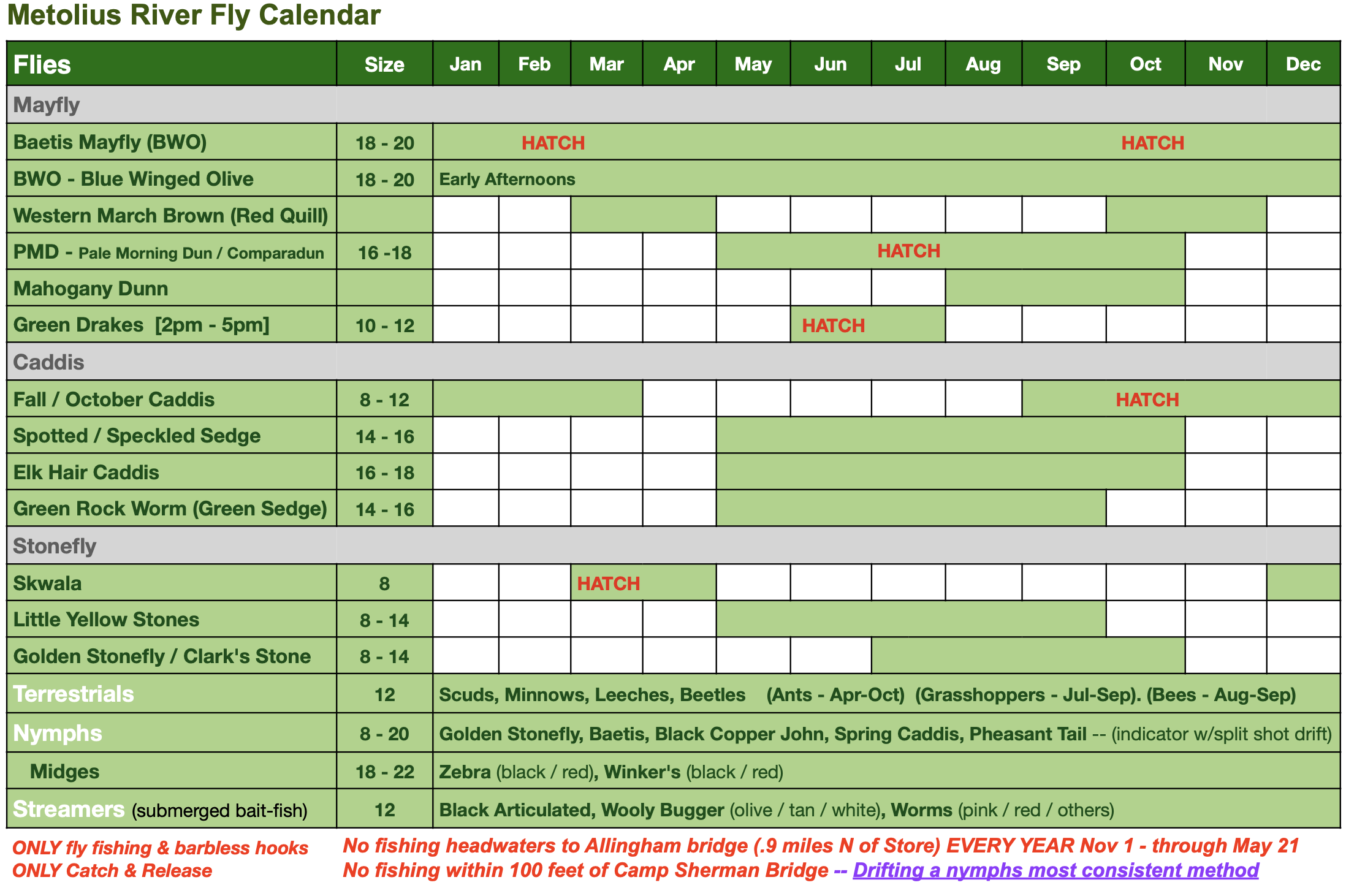
The most important mayflies to hatch on the Metolius River are the Blue-winged Olives. They start as early a January and last through most of June.
Caddisflies are very plentiful on the Metolius River. The Spotted Sedge is probably the most plentiful with its several species. The most important stage of life of the Green Sedge is the larva stage. They are imitated with what is usually called 'Green Rock Worms'. These can be very effective on the Metolius.
Golden Stoneflies can hatch from the middle of June until the middle of September. Imitations of their nymphs work year-round. The Little Yellow Stoneflies - called Yellow Sallies - hatch from the middle of June to the middle of August.
Terrestrial insects are on the Metolius River available for the trout to eat from the middle of June through September. Imitations of beetles, ants and grasshoppers all three work great during this time period. Midges hatch throughout the year and trout can be taken on imitations of their larvae, pupae and adults most anytime of the year, but the most important times are when no other large insects are hatching.
The Fly Fishers Place(July 2026): The Metolius River is a technical, year--round fishery featuring year-round caddis and midge hatches. The upper river (above Bridge 99) is fly-fishing-only and strictly catch-and-release, with the upper-most section closed from November to late May to protect spawning redds. Prime dry fly fishing peaks in the summer, followed by huge streamer fishing for Bull Trout in the fall and winter.
Spring (March - May)
Hatches: Blue-winged Olives (BWO) emerge on cloudy days, and March Browns and early Green Drakes begin hatching towards May. Midges are active throughout the day.
Techniques: Nymphing with small stoneflies, caddis pupae, and midge larvae is highly productive.
Regulation Note: The upper river opens for trout and native redband fishing on May 22.
Summer (June - August)
Hatches: This is the prime dry fly window. The famous Green Drake hatch happens from late May into early July. Pale Morning Duns (PMDs) and Yellow Sallies emerge consistently through August.
Techniques: Match the hatch with exact dry patterns (e.g., #8-12 Drakes, #16-18 PMDs). The fish are notoriously wary, so use long leaders (9-12 feet) and light tippets.
Fall (September - November)
Hatches: The October Caddis hatch is the main event here, starting in September and fishing well through October. Mahogany Duns and Blue-winged Olives are also prevalent.
Techniques: Use large, buoyant dry flies (like size 6-10 October Caddis patterns) and droppers. Bull trout begin migrating upstream to spawn, making fall an excellent time to target them with articulated streamers on sinking lines.
Winter (December - February)
Hatches: Primarily midges and Blue-winged Olives on warmer, overcast days.
Techniques: Winter fishing is all about targeting migratory Bull Trout migrating up from Lake Billy Chinook. Dead-drift large streamers or fish sculpin patterns.
FYI, your reel's "DRAG" should be set so that your line has sufficient drag to not 'spool out
When you put your rod together do it from the far end and not the handle. Insert pieces about 1/4 off center and twist clockwise to better seat
Leader / Tippet - Even if you already have a leader / tippet attached, here's some helpful info:
The leader is the last part of the line, comprised of one or more pieces of mono-filament, ending with your fly.
Your total leader should be about the length of you fly rod - most fly rods are 8 or 9 feet long and should have 7 to 9 foot leader -- either a single 'tapered leader' (commonly available everywhere) or a 'sectioned leader' (hand-built)
A 'sectioned leader' normally consists of the butt end (closest to fly line), mid-section or sections (optional but preferred, in ever smaller diameters), and finally the tippet (where your fly/hook is attached)
NOTE: Packaged leaders are almost always include 'pre-tapered' tippet.
You can look up / buy hook charts which help you easily determine hook size and the matching tippet line size BUT here's the skinny:
Trout tippets are most often 4x to 6x with hook sizes 12 to 22. A 4x tippet would need fly's with hooks in the lower # range (larger) where as a 6x tippet would need fly's with hooks in the higher # range (smaller).
There are a lot of choices and there are no hard and fast rules. Easily spooked trout may need a smaller 6x or 7x line with small hooks (16-24) and Bass, Steelhead, and Salmon would need larger lines (3x to 0x) and larger hooks (sizes 1 to 12).
For most trout, a 4x or 5x line works for hook sizes 12 to 18
To tie fly onto tippet --- place tippet alongside eye of hook and draw back until tippet 'pops' into the eye
FYI, typical streamer leader sections -- .013 -- .015 ... ending with a .020 tippet
Brian Flechsig of Mad River Outfitters (checkout Fishing Video section) breaks down 6 must have accessories for beginner fly-anglers.
Nippers
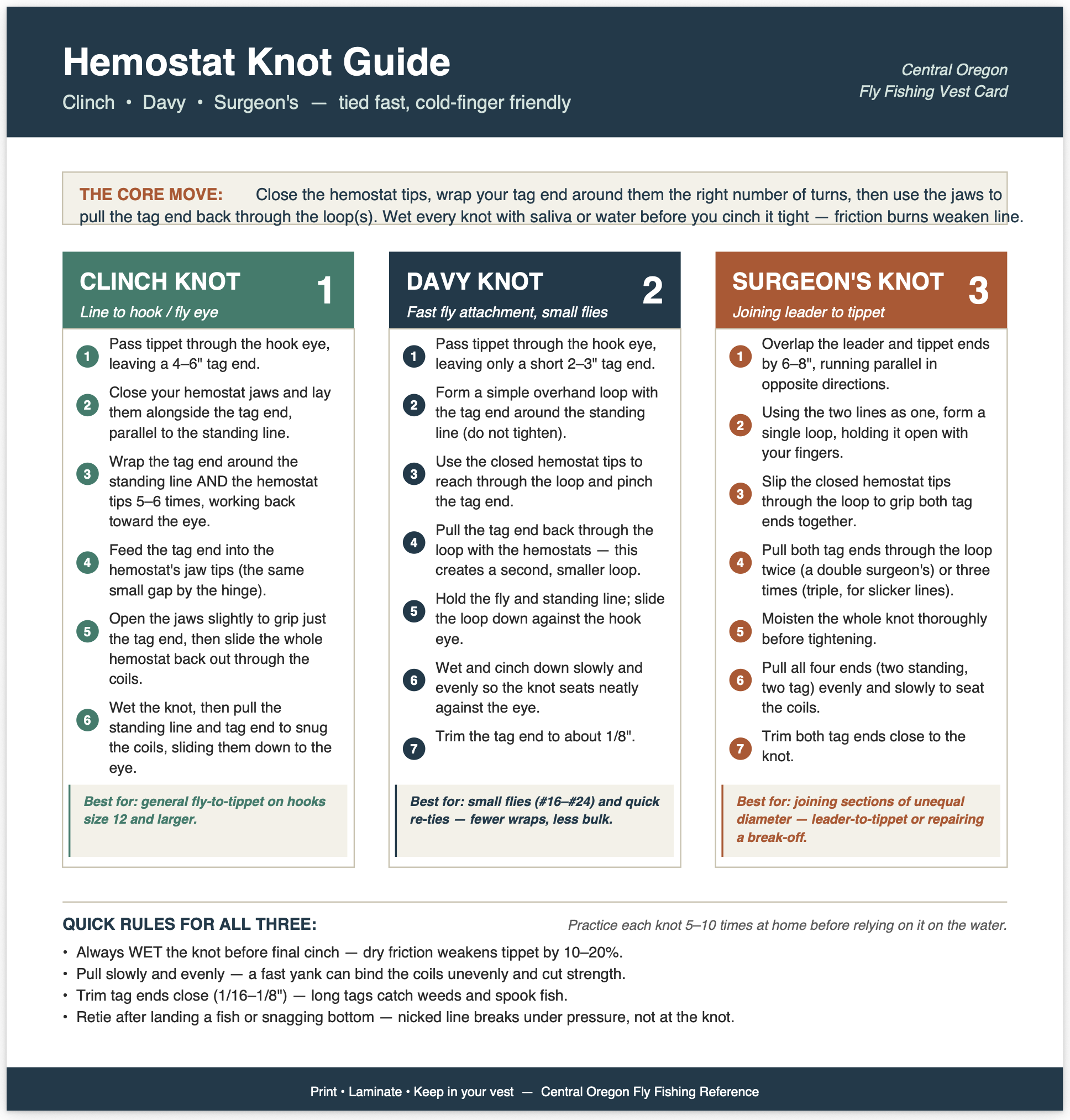
Hemostat
Fly Floatant
Split Shot
Strike Indicators
Polarized Sunglasses
...beyond Brian's list, I would bring at least one or more of these dry flies: 'Adams' or 'Parachute Adams', 'Blue-winged Olive', and 'Elk Hair Caddis' ... and if you want to try nymphs - a 'Yellow Sally' or 'Black Zebra Midge' ... for streamers, try a brown or tan 'Wooly Bugger' ... and a hat!
If you fish a lot, here are some other items you might consider:
GOAL: "Get the fish to take your fly by stealthily presenting what acts and looks like the food the fish are currently eating"
Your leader should taper down to the tippet (thinnest part) which will most likely be between 4x and 7x and be about as long as your rod. A 9 foot rod (most are) should have about a 9 foot leader. Your tippet portion should be at least 2 feet in length. NOTE - You might want to try ~12 foot leaders with 3 foot tippets on the Metolius and Fall Rivers where the fish 'spook' easy.
Having the correct leader is the MOST important part of fly fishing!
Stand slightly sideways (so it's easy to see behind you, which is important until you really get the hang of proper casting)
Grip your rod like you are shaking hands with your thumb on top at the end of the cork.
The basic cast is very similar to 'throwing a dart' or 'hammering a nail' or 'throwing a paper airplane'. No more arm action, arm distance traveled or force than that!
Always start (and finish) your cast with your rod tip just above (or just touching) the water (below your belt!) DO NOT START ABOVE YOUR WAIST!
Start slowly and build up speed gradually.
Keep your elbow stationary (it's the fulcrum), get the line moving before drawing back to begin your backcast. Imagine you are facing a clock where straight overhead is 12 o'clock and straight below is 6 o'clock. Begin with your starting position at @7 o'clock position with your rod tip just above (or just touching) the water and begin to slowly raise your rod.
By the way, ALL clock reference positions REFER to the position your thumb should be pointing.
You accelerate your rod from the 10 o'clock to 1 o'clock, stopping (briefly!) at the 1 o'clock position. You should 'break' your wrist as you finish your upcast and this will allow your line to fully extend behind you.
Standing sideways allows you to see exactly how long it takes for your line to fully unfurl above and behind you.
ONCE MORE: As you slowly draw the rod up, your fishing line will begin to move towards you. Continue moving up and into the air with the majority of your energy should happening between 10 o'clock (fairly high up and in front of you) and 1 o'clock (up and behind you). STOP BRIEFLY to let your line fully extend behind you and then 'relax your wrist' (break it - a little snap) ... stop, drop (your wrist), and roll (forward)!
Then start your downcast - again, with the majority of energy between 10 o'clock and 1 o'clock , and again 'breaking' your wrist - slightly snapping your line at the 1 o'clock position. (where you would 'release the dart or paper airplane' or 'hammer the nail!')
At this point, you can either...
Repeat the upcast and downcast as many times as you wish (1 o'clock to 10 o'clock to 1 o'clock ...). THIS IS CALLED FALSE CASTING. Experienced fly fishers usually only do this one time generally leaving false casting only for those times when they want to dry out their fly. OR
With diminishing energy after the downcast wrist 'break' at @1 o'clock, finish your downcast and lower your rod to just above the water at about the 7 o'clock position (below your belt!) and begin fishing -- you are hoping for a very delicate presentation as the tippet and fly land in your target zone so as not to spook any fish.
AFTER EVERY CAST - PUT YOUR LINE UNDER YOUR INDEX FINGER
THINK: You ARE NOT casting the fly line ... You ARE casting the leader and fly!
Your upcast and downcast between the 10 o'clock and 1 o'clock positions should be AT THE SAME ENERGY AND TEMPO and your upcast and downcast before and after reaching the 1 o'clock position should also be similar energy and tempo.
REMEMBER: DO NOT MOVE YOUR FULCRUM POINT (YOUR ELBOW)
Once your line and fly are on the water, you can 'strip your line' by using your left hand to grab the line behind your index finger and pull in segments. This may attract a fish and then if you want to 'shoot the line' you simply upcast and on the downcast - at the 10 o'clock position - you release your tight grip on the line (keeping it loosely 'cupped' in your left hand) - and the line you stripped with go back out. 'Hammer the nail' and THEN release your grip on the fly line!
If you cannot backcast (obstruction/tree etc.) then you can roll cast. You simply bring back your rod slowly to the 10 o'clock position, let the line come to a stop, and then do a normal downcast. Give it a try and then practice!
PRACTICE, PRACTICE, PRACTICE!!!
YOU CAN MORE EASILY LEARN CASTING BY PUTTING ONE KNEE ON THE GROUND, BENDING THE OTHER KNEE, AND USING THE BENT KNEE LEG TO SUPPORT YOU ELBOW. THIS WILL HELP YOU LEARN TO KEEP YOUR ELBOW STATIONARY AND ALLOW YOU WATCH YOUR BACKCAST COMPLETE SO YOU CAN BETTER UNDERSTAND HOW MUCH TIME YOU NEED TO STOP AT THE COMPLETION OF YOUR BACKCAST.
ADVANCED CASTING
The 'roll cast' is extremely important if you don't have room behind you to cast. Leaving your leader on the water slowly bring back to about the 1 o'clock position and then move your rod quickly forward, pointing your thumb at your target spot.
The 'double haul' ... what?! - - This is an advanced casting skill you should consider only AFTER you are totally comfortable with the basic cast. It is especially helpful if you are casting longer distances or if it is windy.
A double haul will increase your line speed and allow you to cast farther, faster, and cast more effectively in windy conditions. NOTE: it is difficult to explain or master so here are a couple of handy links:
Written summary: tinyurl.com/readdoublehaul
Video summary with training drill: tinyurl.com/watchdoublehaul
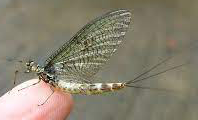 Mayfly (Dry)
Parachute Adams (Gray, Purple Haze), Baetis Mayfly, Blue Wing Olive (BWO), Pale Morning Dun (PMD), Green Drake Comparadun, March Brown Comparadun, Mahogany Dun, Rusty Spinner
Mayfly (Dry)
Parachute Adams (Gray, Purple Haze), Baetis Mayfly, Blue Wing Olive (BWO), Pale Morning Dun (PMD), Green Drake Comparadun, March Brown Comparadun, Mahogany Dun, Rusty Spinner
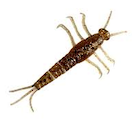 Mayfly Nymph (Wet)
Beadhead Pheasant Tail, Hare's Ear (Gold Ribbed Hare's Ear), Copper John, Prince, Serendipity
Mayfly Nymph (Wet)
Beadhead Pheasant Tail, Hare's Ear (Gold Ribbed Hare's Ear), Copper John, Prince, Serendipity
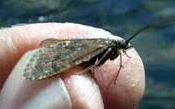 Caddis (Dry)
Caddis (various), Elk Hair Caddis, Green Caddis, Spotted/Speckled Caddis, Grannom Caddis, Green Rock Worm (Green Sedge), October Caddis (Fall)
Caddis (Dry)
Caddis (various), Elk Hair Caddis, Green Caddis, Spotted/Speckled Caddis, Grannom Caddis, Green Rock Worm (Green Sedge), October Caddis (Fall)
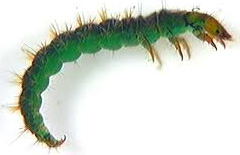 Caddis Nymph (Wet)
Caddis Pupa, Sparkle Pupa, Z-Wing Caddis, Serendipity
Caddis Nymph (Wet)
Caddis Pupa, Sparkle Pupa, Z-Wing Caddis, Serendipity
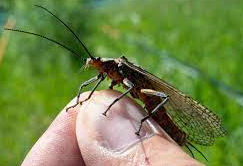 Stonefly (Dry)
Terrestrials (ant, beetle, grasshopper), Yellow Sally, Golden Stonefly /Clark's Stone (orange / yellow), Little Black Stones, Olive Stones, Little Yellow Stones
Stonefly (Dry)
Terrestrials (ant, beetle, grasshopper), Yellow Sally, Golden Stonefly /Clark's Stone (orange / yellow), Little Black Stones, Olive Stones, Little Yellow Stones
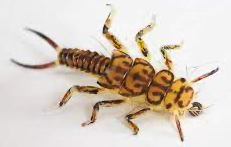 Stonefly Nymph (Wet)
Pat's Rubber Legs, Girdle Bug, Kaufmann's Stone, 20-Incher
Stonefly Nymph (Wet)
Pat's Rubber Legs, Girdle Bug, Kaufmann's Stone, 20-Incher
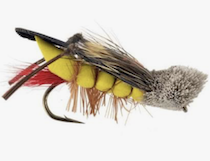 Other Surface (Dry)
Hopper (Dave's Hopper, Chernobyl Ant), Griffith's Gnat (midge cluster), Ant, Beetle, Cricket, Mosquito
Other Surface (Dry)
Hopper (Dave's Hopper, Chernobyl Ant), Griffith's Gnat (midge cluster), Ant, Beetle, Cricket, Mosquito
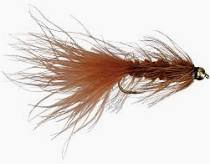 Other Subsurface (Wet)
Woolly Bugger, Zebra Midge, WD-40, Brassie (midges), Muddler Minnow, Clouser Minnow, Zonker, Sculpin patterns (streamers), San Juan Worm, Egg patterns, Squirmy Wormy (attractors/other), ANYTHING ORANGE - for Crooked River
Other Subsurface (Wet)
Woolly Bugger, Zebra Midge, WD-40, Brassie (midges), Muddler Minnow, Clouser Minnow, Zonker, Sculpin patterns (streamers), San Juan Worm, Egg patterns, Squirmy Wormy (attractors/other), ANYTHING ORANGE - for Crooked River